
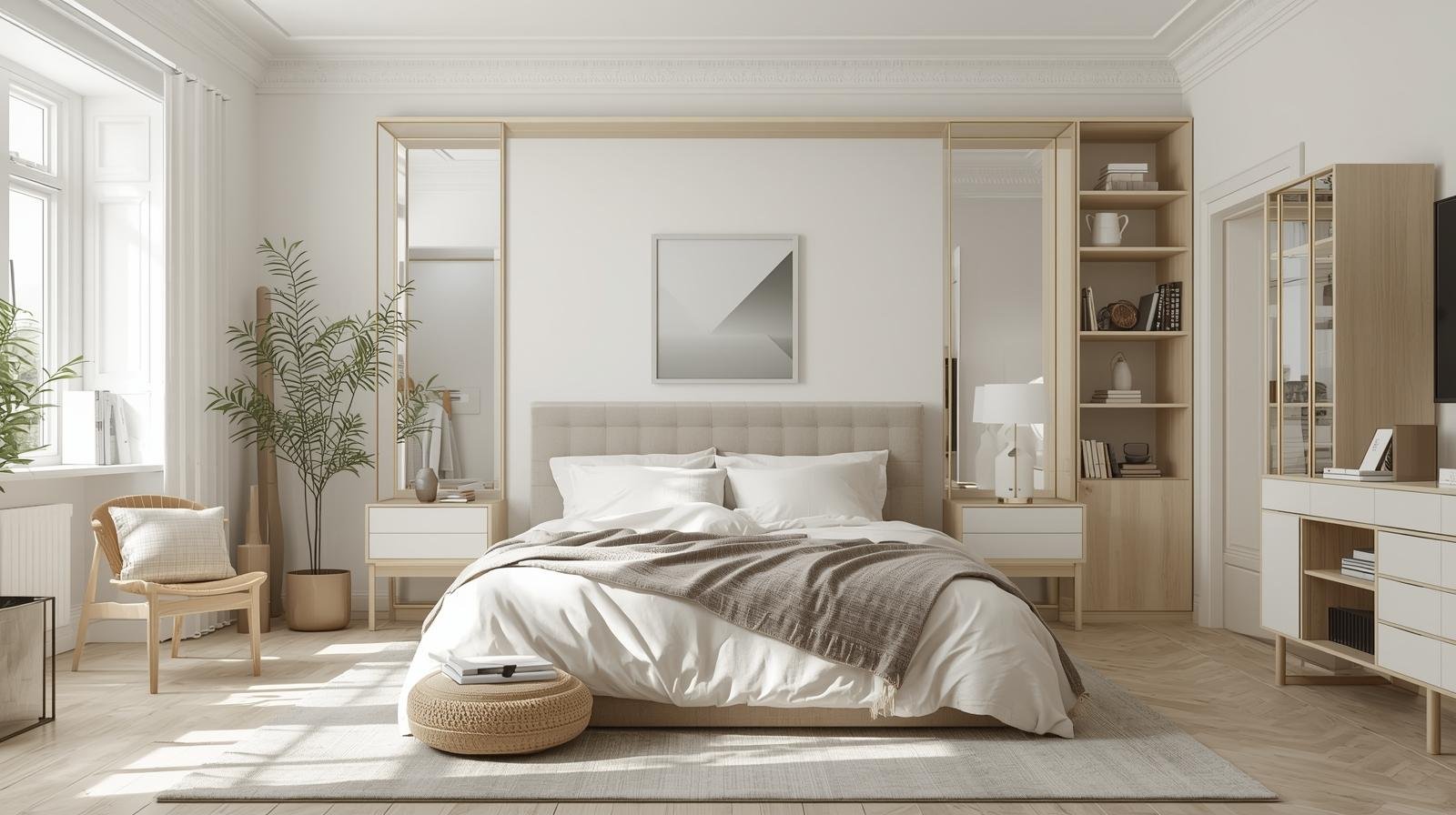
There is a particular kind of frustration that comes with a small bedroom. You lie in bed staring at walls that feel like they’re slowly closing in. You open your wardrobe and immediately lose something. You try to rearrange the furniture for the fourth time and realize there is genuinely only one way it all fits. If any of this sounds familiar, you are in very good company.
Small bedrooms are one of the most common decorating challenges people face — and they are also one of the most beautifully solvable ones. Because here is the truth that every experienced interior designer knows: the physical dimensions of a room are only one part of how large that room feels. The other part — often the more powerful part — is entirely within your control.
With the right small-bedroom decor ideas, a compact room can feel genuinely spacious, airy, and comfortable. The right colors, furniture choices, lighting strategies, and spatial tricks create a perception of space that goes well beyond what a tape measure would suggest.
These 15 simple yet powerful small-bedroom decor ideas will transform the way your room looks and feels, giving you back the sense of openness, calm, and comfort every bedroom deserves, regardless of its square footage.
Why Small Bedrooms Deserve Thoughtful, Strategic Decorating
Before we explore the specific ideas, it’s worth understanding why small bedrooms specifically benefit from a more strategic approach to decorating than larger rooms.
In a generously sized bedroom, decorating mistakes are easier to correct. A slightly oversized piece of furniture, a slightly dark color on one wall, a slightly cluttered corner — none of these things significantly impact how the room feels because there is enough space to absorb them.
In a small bedroom, every decision has a magnified effect. The wrong furniture scale makes the room feel crammed. The wrong color makes the walls appear. Too much clutter makes a tight space feel genuinely claustrophobic. But by the same principle, the right decisions are also powerfully amplified—a well-chosen color palette, a strategic mirror, a smart storage solution —all have a disproportionately positive impact on a small room.
That’s the opportunity hidden inside every small bedroom. With intention and knowledge, small bedroom decor can be just as beautiful — and feel just as spacious — as any larger room. Let’s show you exactly how.
Trick 1 — Choose a Light, Unified Color Palette for Walls and Ceiling
There is no single small-bedroom decor idea more immediately effective than choosing the right color palette—and specifically, the right relationship between your wall color and ceiling color.
Light colors reflect natural and artificial light throughout a room, making walls appear to recede, and the space feel more open and airy. Dark colors absorb light, making walls appear closer and the room feel smaller and more enclosed.
For maximum space-enhancing effect in a small bedroom, paint your walls, ceiling, and even your trim in tones from the same light, warm color family. This seamless, monochromatic approach blurs the room’s visual boundariesof the room —the eye cannot clearly see where the walls end and the ceiling begins —and the space reads as a single, generous volume.
The most effective light palettes for small bedrooms in 2026 include:
- Warm white with a soft yellow or cream undertone — brighter and more inviting than cool stark white
- Soft greige — a warm, sophisticated blend of grey and beige that feels calm and spacious
- Pale sage green — a nature-inspired tone that feels fresh, open, and wonderfully restful
- Blush white — a barely-there pink warmth that makes a small bedroom feel romantic and airy
- Very pale lavender — a gentle, cool tone that recedes beautifully and feels deeply peaceful
If you love color and want to incorporate something bolder, do so through textiles, artwork, and small accessories rather than the main wall surfaces. Your color story can be rich and personal without making your walls close in.
Trick 2 — Hang Curtains High and Wide to Fake Tall Windows
This is one of the most beloved and most effective small-bedroom decor ideas — and it requires nothing more than repositioning your existing curtain hardware or investing in a longer curtain rod.
The principle is simple: hang your curtain rod as close to the ceiling as possible — ideally within five to ten centimeters of the ceiling line — and extend the rod significantly wider than the window frame on both sides. Then choose curtains that fall in a long, straight line from this elevated position all the way to the floor.
The result is a visual illusion that makes your windows look dramatically taller and more generous than they actually are, drawing the eye upward and creating a powerful impression of height and space. Rooms with tall, flowing curtains feel inherently more spacious and more elegant than rooms with short, narrow window treatments.
For small bedrooms, choose curtain fabrics in light, semi-sheer materials like linen voile, lightweight cotton, or sheer linen that allow natural light to filter through while maintaining privacy. Curtains in the same tone as your walls — or very close to it — reinforce the seamless, space-expanding effect.
Trick 3 — Use a Large Mirror Strategically
Mirrors are perhaps the most universally known of all small bedroom decor ideas — and they remain as effective today as they have ever been, provided they are used with genuine strategic intention rather than placed wherever convenient.
The mechanism is elegant: a large mirror reflects both the room and the light within it, creating the powerful visual impression that the space extends beyond the wall. Stand in front of a well-placed large mirror, and the room genuinely appears to double in size.
Here is how to use mirrors most effectively in a small bedroom:
- Position a large floor mirror or full-length wall mirror on the wall opposite your window, where it will reflect the maximum amount of natural light deep into the room
- Choose a proportionally generous mirror — the larger, the better. A small mirror in a small room looks like a small room with a small mirror. A large mirror in a small room makes the small room feel large.
- Consider an arched full-length mirror leaned against the wall rather than hung — this is one of 2026’s most stylish and on-trend bedroom looks, and it requires no installation whatsoever
- Use a mirrored wardrobe door on your built-in storage to serve the double purpose of a functional mirror and a space-enhancing reflective surface
- A mirror placed behind a bedside lamp will reflect and amplify the warm light, making the whole room feel warmer and more spacious simultaneously
Trick 4 — Invest in a Bed with Built-In Storage
In a small bedroom, the bed occupies most of the floor space—often 50% or more of the room’s usable area. This makes the bed the most important furniture decision for the room, and choosing one with integrated storage transforms it from a space consumer into a space creator.
Beds with built-in storage typically come in two forms:
- Ottoman beds: The entire base lifts on a gas-assisted mechanism to reveal a large, deep storage cavity beneath the mattress — ideal for seasonal bedding, spare pillows, bulky sweaters, and items used infrequently
- Divan beds with drawer bases: Deep drawers on one or both sides of the bed base provide accessible everyday storage for clothing, accessories, and bedding without requiring a separate chest of drawers
Eliminating the need for a standalone chest of drawers or under-bed storage boxes frees up significant floor space and visual breathing room in a small bedroom — making it feel larger and less cluttered immediately.
When choosing a storage bed, opt for a clean, simple headboard design to prevent the bed from feeling visually heavy. An upholstered linen or velvet headboard in a tone close to your wall color is a sophisticated choice that adds comfort without visual bulk.
Trick 5 — Choose Slim, Wall-Mounted Bedside Solutions
One of the most common ways that small bedrooms lose precious floor space is through bulky bedside tables. Traditional nightstands, while practical and beautiful in larger rooms, consume significant floor area in a small bedroom and can make the space feel cramped on both sides of the bed.
The solution is to take your bedside storage off the floor entirely. Wall-mounted alternatives are one of the most effective small bedroom decor ideas for instantly freeing up visual and physical floor space:
- Floating bedside shelves mounted at mattress height provide a surface for a lamp, phone, book, and water glass without a single leg touching the floor
- Wall-mounted swing-arm sconces positioned above and beside the bed replace a bedside lamp entirely, freeing up shelf space while adding beautifully intentional lighting
- Small wall-mounted cabinets with a single door and internal shelf provide enclosed storage for bedside essentials while keeping the surface clear and clutter-free
The floor space revealed by removing traditional bedside tables — even just thirty to forty centimeters on each side of the bed — makes a disproportionately large difference to how open and spacious the room feels.
Trick 6 — Use Vertical Space for Storage and Display
When floor space is genuinely limited, the answer is to look up. Most small bedrooms have considerably more vertical space than their owners ever use — and using that space effectively is one of the smartest small-bedroom decor ideas.
Here is how to maximize your bedroom’s vertical space:
- Install floating shelves high on the walls — above head height — for storing books, displaying plants and objects, and keeping everyday items accessible without cluttering lower surfaces
- Choose a wardrobe that extends from floor to ceiling rather than stopping at a standard height, using the full vertical space available and providing significantly more storage than a standard wardrobe
- Stack your storage — drawers beneath the bed, open shelves on the wall above, hooks on the back of the door — creating a layered vertical storage system that keeps the floor as clear as possible
- Hang artwork higher than feels instinctively right, encouraging the eye to travel upward and creating a sense of height
- Use tall, narrow furniture rather than wide, low pieces — a slim, tall chest of drawers takes less floor space and draws the eye upward far more effectively than a wide, low dresser
Every centimeter of vertical space you use effectively is a centimeter of floor space you don’t need — and in a small bedroom, that trade is always worth making.
Trick 7 — Keep Furniture Scaled Appropriately for the Room
One of the most damaging things you can do to a small bedroom is fill it with furniture that is designed and proportioned for a larger space. Oversized furniture in a small room creates an immediate sense of being cramped — as though the furniture is claiming the room rather than serving it.
The principle of appropriate furniture scale is one of the most important small bedroom decor ideas for maintaining a sense of space and proportion.
Here is what an appropriate scale looks like in practice:
- Choose a bed in the largest size that genuinely fits the room while still leaving adequate circulation space on at least two sides — typically sixty to seventy-five centimeters of walking space alongside the bed
- Opt for furniture with slim profiles and lighter visual weight — legs rather than solid bases, open shelving rather than closed bulk, streamlined headboards rather than towering padded statements
- Limit the number of individual furniture pieces in the room — a bed, one wardrobe, one or two bedside solutions, and one additional storage piece is typically sufficient for a small bedroom
- Choose furniture in tones close to your wall color to reduce visual contrast and allow pieces to blend into the room rather than stand out as bulky separate objects
Appropriately scaled furniture in a small bedroom feels like it belongs there — considered and intentional rather than crammed and apologetic.
Trick 8 — Maximize Natural Light and Layer Your Artificial Lighting
Light—both natural and artificial—is one of the most powerful tools in small-bedroom decor. A well-lit small bedroom feels open, airy, and considerably larger than a poorly lit one of identical dimensions.
To maximize natural light in a small bedroom:
- Keep window areas completely clear of furniture that might obstruct or interrupt the flow of light into the room
- Choose lightweight, sheer curtain fabrics that filter and diffuse light rather than blocking it
- Clean your windows regularly — it makes a genuine, visible difference to how much light enters the room
- Use reflective surfaces — mirrors, gloss-finish furniture, metallic accessories — near windows to bounce light deeper into darker areas of the room
For artificial lighting, layer multiple sources rather than relying on a single overhead light:
- A dimmable overhead light or ceiling fixture for general ambient illumination
- Wall-mounted sconces on either side of the bed for warm, directional task lighting
- A small table or floor lamp in a corner to fill darker areas with additional warmth
- Warm-toned fairy lights or LED strips behind the headboard or beneath the bed for soft, atmospheric accent lighting
A small bedroom with layered, warm, thoughtfully positioned lighting feels intimate and inviting rather than cramped and dim.
Trick 9 — Declutter Aggressively and Maintain Clear Surfaces
No small bedroom decor idea — no matter how cleverly executed — can compensate for a genuinely cluttered room. Clutter is the enemy of small spaces in a way that has no design solution other than its removal.
When a small bedroom is cluttered, every problem it has is amplified. It feels smaller, darker, more stressful, and more difficult to navigate. When the same bedroom is clean, clear, and organized, it feels genuinely larger and infinitely more restful.
Here is a practical approach to decluttering a small bedroom effectively:
- Remove everything that does not truly belong in a bedroom — paperwork, exercise equipment, hobby materials, and anything else that has accumulated without serving a genuine bedroom purpose
- Edit your clothing and belongings ruthlessly — donate, sell, or store anything you haven’t used in six months or more
- Find proper storage for every remaining item — nothing should live on the floor, on a chair, or on any surface without a designated home
- Keep your bedside surfaces minimal— just a lamp, a book, and perhaps a small plant. Everything else lives in a drawer or on a shelf
- Implement a daily five-minute tidy routine that prevents clutter from accumulating between deeper organizing sessions
A clear, organized small bedroom is the foundation on which every other small bedroom decor idea builds most effectively.
Trick 10 — Use Under-Bed Storage Intelligently
The space beneath your bed is some of the most underutilized real estate in a small bedroom — and using it intelligently is one of the easiest and most effective small bedroom decor ideas for gaining significant storage without sacrificing any additional floor space.
The best approaches to under-bed storage include:
- Low-profile storage drawers or boxes on wheels for items accessed regularly — spare bedding, out-of-season clothing, shoes
- Vacuum storage bags for bulky items like winter duvets, spare pillows, and heavy sweaters that compress to a fraction of their normal size
- Shallow, lidded boxes in a consistent color or material for a tidier, more intentional look if any under-bed storage is visible
For maximum under-bed storage capacity, choose a bed frame that sits at least twenty-five to thirty centimeters off the floor. Beds that sit very close to the floor offer little usable storage space beneath them and can also make a small bedroom feel lower and more cramped.
Keeping under-bed storage organized and contained—rather than allowing it to become a dumping ground—is essential to maintaining the clean, calm feel a small bedroom needs.
Trick 11 — Choose Multi-Functional Furniture Throughout
In a small bedroom, every piece of furniture needs to work harder than it would in a larger space. Multi-functional furniture — pieces that serve two or more distinct purposes simultaneously — is one of the most practical and effective of all small bedroom decor ideas.
Here are the most valuable multi-functional furniture choices for small bedrooms:
- A storage ottoman at the end of the bed that provides seating, a surface for folded throws, and hidden internal storage simultaneously
- A dressing table that doubles as a desk for working from home, combining two functional zones into one piece of furniture
- A narrow bookcase used as a room divider that separates a sleeping area from a dressing area in a studio or very open bedroom layout
- Mirrored wardrobe doors that serve as full-length mirrors, eliminating the need for a separate standalone mirror
- A bed with a headboard that incorporates built-in shelving for books, a lamp, and bedside essentials, replacing the need for separate bedside tables
When each piece of furniture earns its place through multiple functions, you need fewer total pieces — and fewer pieces means more open, spacious, beautiful floor space.
Trick 12 — Use Stripes and Vertical Patterns Intentionally
Pattern is a powerful tool in small-bedroom decor, and using it intentionally can create optical illusions that alter how the room feels to anyone in it.
Vertical stripes — whether in wallpaper, fabric, or painted directly onto walls — draw the eye upward and create a strong impression of increased ceiling height. A room with vertical-striped wallpaper on one wall consistently feels taller than the same room without it.
Here is how to use pattern intentionally in a small bedroom:
- Apply vertically striped wallpaper to the wall behind the bed as a feature wall — choose stripes in tones close to your main wall color for a subtle effect, or in a slightly contrasting tone for more drama
- Choose striped bedding with vertical lines running from headboard to foot for a lengthening effect
- Use long, vertically patterned curtains that emphasize the height from the ceiling to the floor
- Avoid wide horizontal stripes, which create the opposite effect — widening the apparent walls and lowering the apparent ceiling
Even subtle vertical pattern elements subtly make a small bedroom feel taller and more generous.
Trick 13 — Opt for a Platform Bed or Low-Profile Sleeping Solution
The height of your bed relative to the room significantly affects how spacious the bedroom feels. A very high bed in a small room can make the ceiling feel oppressively low, and the room feel like a box. A low-profile bed, by contrast, emphasizes the vertical space above it and makes the room feel taller and more open.
Platform beds and low-profile bed frames are excellent small-bedroom decor options for rooms with limited ceiling height or where a more open, airy feel is desired.
When choosing a low-profile bed:
- Look for frames that sit between twenty-five and forty centimeters off the floor — low enough to emphasize the vertical space above, but high enough to allow useful under-bed storage
- Choose a headboard that is proportionate rather than towering — a headboard that extends only slightly above mattress height maintains the low, clean visual line
- Complement the low bed with other low-profile furniture for a consistent, intentional aesthetic — low bedside solutions, a low chest, and minimal overhead accessories
The Japandi and warm minimalist styles dominating 2026 interiors both make extensive use of low-platform bed frames—and their popularity is no coincidence.
Trick 14 — Keep Your Floor as Clear as Possible
This small bedroom decor idea sounds almost too simple — but its impact on how spacious a small room feels is genuinely significant and consistently underestimated.
The amount of visible floor space in a room directly affects how large the room appears. When most of the floor is occupied by furniture legs, storage boxes, shoes, clothing piles, and accumulated items, the room feels dense and crowded. When your floor is largely clear and visible, the room reads as open and spacious.
Practical strategies for keeping your bedroom floor maximally clear:
- Store everything with a proper home — nothing should live permanently on the floor
- Use hooks on walls and the backs of doors for bags, belts, robes, and accessories that would otherwise end up on the floor or on chairs
- Keep a small decorative basket near the door for items that need to be taken out of the bedroom — rather than leaving them scattered on the floor
- Treat your floor as a design surface — a beautiful rug covering the central floor area, with clear visible flooring around the edges of the room, looks intentional and spacious
A clear floor is one of the simplest and most effective ways to make a small bedroom feel larger.
Trick 15 — Edit Your Accessories and Display Only What You Truly Love
The fifteenth and final of our small bedroom decor ideas is perhaps the most personal — and in many ways the most powerful of all.
In a small bedroom, there is simply no room for accessories, artwork, and decorative objects that you don’t genuinely love. Every item you display in a small bedroom competes for the limited visual space available. Too many items create visual noise, making the room feel busy, cluttered, and smaller than it is.
The answer is ruthless, loving curation. Display only the things that genuinely bring you joy and contribute to the calm, beautiful atmosphere your bedroom deserves.
Here is how to approach accessory editing in a small bedroom:
- Keep surfaces to one or two carefully chosen items each — a single plant, one beautiful candle, and one meaningful object on a bedside shelf is a complete and intentional vignette
- Choose artwork carefully — one or two pieces that genuinely move you, hung with intention and adequate breathing space around them, always looks better than a crowded arrangement of many smaller pieces
- Resist the accumulation of things. Regularly reassess what is on display and remove anything that no longer serves the room’s aesthetic or your personal joy
- Let your most beautiful and meaningful possessions take center stage by giving them space and prominence rather than surrounding them with lesser pieces that dilute their impact
A small bedroom that contains only things you truly love is one of the most beautiful spaces imaginable — peaceful, personal, and perfectly, deliberately yours.
Quick Reference — 15 Small Bedroom Decor Ideas at a Glance
Here is a summary of all fifteen tricks for easy reference:
- Choose a light, unified color palette for walls and ceiling
- Hang curtains high and wide to fake taller windows
- Use a large mirror placed strategically for space and light
- Invest in a bed with built-in storage drawers or an ottoman base
- Replace bulky bedside tables with wall-mounted shelf solutions
- Exploit vertical wall space for storage and display
- Keep all furniture appropriately scaled for the room size
- Maximize natural light and layer warm artificial lighting
- Declutter aggressively and maintain clear, calm surfaces
- Use under-bed space intelligently with organized storage solutions
- Choose multi-functional furniture throughout the room
- Use vertical stripes and patterns to increase the apparent ceiling height
- Opt for a low-profile platform bed to emphasize vertical space
- Keep your floor as clear and visible as possible
- Edit accessories ruthlessly and display only what you truly love
Conclusion — Your Small Bedroom Can Feel Like a Luxury Retreat
A small bedroom is not a design problem. It is a design opportunity — one that, when approached with knowledge, intention, and a little creative courage, produces some of the most beautiful, peaceful, and personally meaningful spaces in any home.
The fifteen small-bedroom decor ideas in this guide provide a complete toolkit for transforming how your bedroom looks, how it functions, and, most importantly, how it feels. You now know how to use color, light, mirrors, furniture scale, storage, and curation to create a room that feels genuinely spacious, calm, and deeply restful — regardless of how many square feet it actually contains.
You don’t need to implement all fifteen ideas at once. Start with the three or four that resonate most strongly with your current situation — perhaps a fresh coat of light paint, a strategic mirror, and a thorough declutter. Feel the difference those changes make. Then build from there, one thoughtful decision at a time.
Your small bedroom deserves to be your favorite room in the house. A sanctuary that restores you, reflects you, and makes every morning and every evening a little more beautiful. That bedroom already exists — it is waiting for you to reveal it, one smart, intentional choice at a time.
Frequently Asked Questions (FAQs)
1. What are the best small bedroom decor ideas to make a room look bigger? The most effective small bedroom decor ideas for making a room look bigger include painting walls and ceiling in the same light, warm neutral tone to blur boundaries and maximize reflected light, hanging large mirrors opposite windows to double the apparent depth of the space, choosing a bed with integrated storage to eliminate additional furniture, mounting bedside solutions on the wall rather than using floor-standing tables, and hanging curtains as high as possible with the rod extending well beyond the window frame on both sides.
2. What colors make a small bedroom look larger? Light, warm neutral colors are most effective at making a small bedroom feel larger because they reflect light and make the walls visually recede. The best choices include warm white with a cream or yellow undertone, soft greige, pale sage green, blush white, and very pale lavender. Painting the ceiling in the same tone as the walls — or slightly lighter — removes the visual boundary between the wall and ceiling, creating a seamless, spacious effect. Avoid cool grey whites, which can feel clinical, and avoid dark colors on any surface in a room where space is the primary concern.
3. How do I maximize storage in a small bedroom without making it feel cluttered? The key to maximizing storage in a small bedroom without creating visual clutter is to use hidden and integrated storage wherever possible. A bed with an ottoman base or built-in drawers offers substantial storage without adding extra furniture. Wall-mounted shelves and floating bedside solutions lift storage off the floor, making the room feel more open. Wardrobes that extend floor-to-ceiling maximize vertical space. Everything stored should be organized so that opening any door or drawer reveals order rather than chaos—even hidden clutter creates a subtle psychological weight in a small space.
4. What size bed should I choose for a small bedroom? For a small bedroom, choose the largest bed that allows at least 60 cm of circulation space on both sides and at the foot. In most small bedrooms, this means a full or queen-size bed rather than a king-size, but the exact choice depends on your room dimensions. A bed that is proportionately right for the room — leaving adequate clear floor space around it — always looks and feels better than a bed that fills the room to its edges. Always measure carefully before purchasing, and consider the headboard size as well as the overall bed footprint.
5. Should I use dark or light colors in a small bedroom? Light colors are almost always the better choice for a small bedroom because they reflect light and create a sense of space. However, if you prefer darker tones, you can use them effectively with careful planning. A single dark accent wall — particularly behind the bed — can add drama and depth without making the entire room feel smaller, especially when the remaining three walls are kept in a light, complementary tone. Dark colors work best in small bedrooms that have excellent natural light and at least one large mirror to reflect that light into the space.

Leave a Reply