
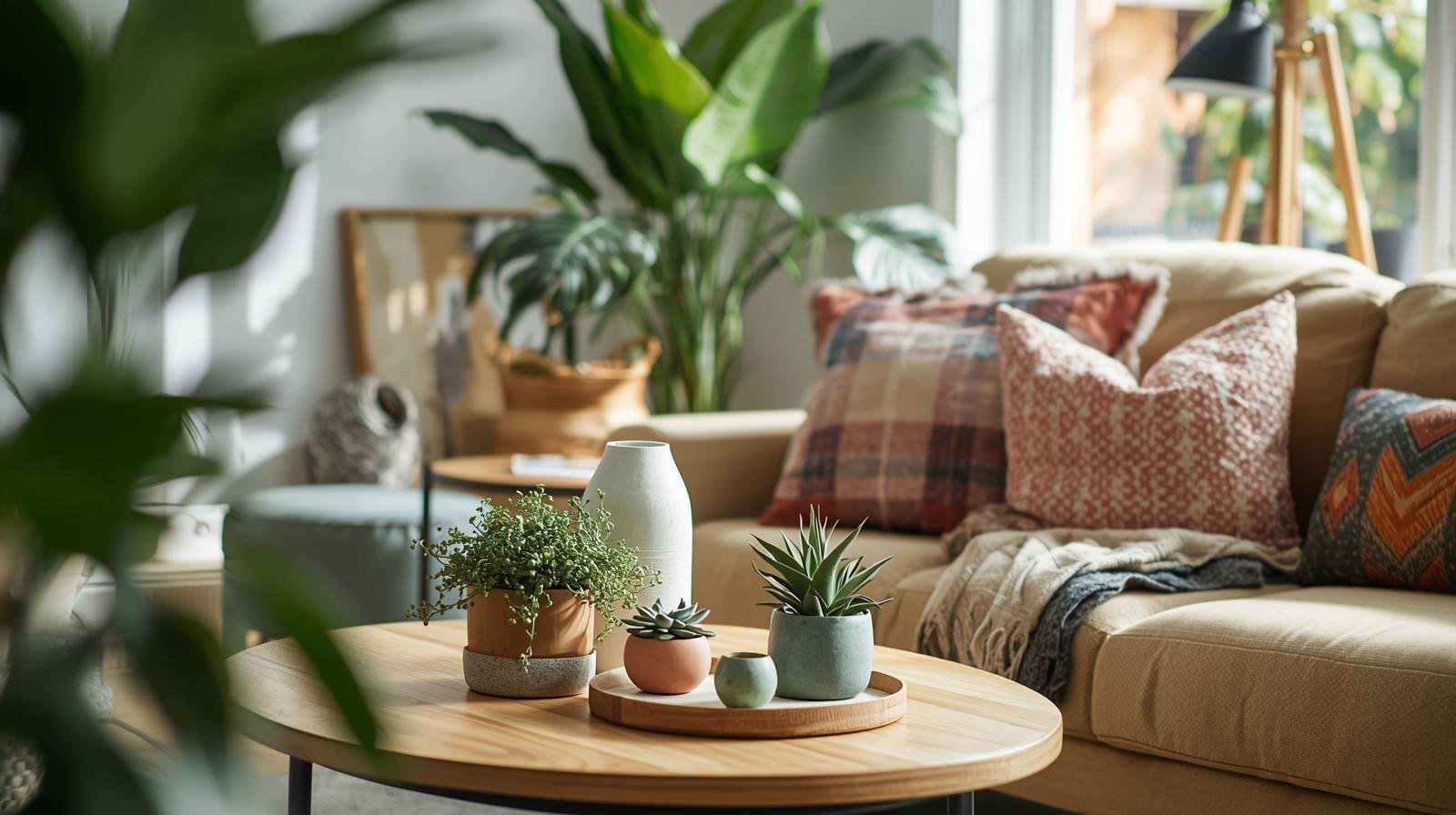
Here is a truth that the interior design industry would rather you didn’t know: a beautiful home has very little to do with how much money you spend. It has everything to do with creativity, intention, and knowing where to look for the best ideas and the smartest deals.
Budget home decor is not about settling for less. It’s about being resourceful, thoughtful, and clever with the money you have — and the results can be genuinely extraordinary. Some of the most stunning, stylish, and personality-filled homes you’ll ever see were decorated on shoestring budgets by people who understood that great decor is about vision, not spending power.
The challenge, of course, is knowing exactly where to start — and that’s precisely what this guide is for. Whether you have one hundred dollars to spend across your entire home or you simply want to refresh a single room without breaking the bank, these budget home decor ideas will show you how to make every single dollar count.
From thrift store transformations to free decorating strategies that cost nothing at all, from clever DIY projects to smart shopping tips that deliver designer looks at discount prices — everything you need to create a home you genuinely love on a budget that actually works is right here.
Let’s get into it.
Why Budget Home Decor Is More Achievable Than You Think
Before we dive into the ideas themselves, let’s address the biggest myth about budget home decorating: that affordable automatically means cheap-looking.
It doesn’t. And the reason it doesn’t is simple — style is not a price tag. Style is a skill. It’s the ability to see potential where others see nothing, to combine colors and textures in a way that feels intentional and harmonious, and to make thoughtful choices that add up to something genuinely beautiful.
The best budget home decor ideas leverage exactly this kind of skill. They show you how to train your eye, shop strategically, and use creativity as the currency that transforms ordinary spaces into extraordinary ones — all for a fraction of what a professional decorator would charge or a furniture store would bill.
With the right approach, one hundred dollars genuinely is enough to meaningfully transform a room. Let’s show you how.
Step One — Start with a Free Decor Audit and Rearrange What You Have
The very first and most powerful budget home decor idea costs absolutely nothing — and it can change your home dramatically without a single trip to a store.
Before you spend one cent on new items, take a thorough, fresh look at what you already own. Walk through your home with the eyes of a stranger and notice what you actually have. Chances are very good that you have beautiful, useful items that are either misplaced, underused, or simply not being displayed to their best advantage.
Here is how to do a proper home decor audit:
- Move accessories, books, plants, and decorative objects from room to room to see if they work better somewhere new
- Rearrange your furniture layouts to improve flow, create better conversation areas, or maximize natural light
- Move artwork from rooms where it blends into the background to spaces where it makes a genuine statement
- Bring items out of storage — candles you’ve been saving, vases you never use, textiles folded away in cupboards — and find homes for them on display
- Edit ruthlessly by removing anything that doesn’t contribute to the look and feel you want, even if that means temporarily storing it somewhere out of sight
A thorough rearrangement of what you already own costs nothing and frequently reveals that your home already contains far more decorating potential than you realized. Many people discover after this process that they need to buy very little new at all.
Idea 1 — Refresh Your Walls with a Single Can of Paint (Under $30)
If there is one budget home decor idea that delivers the most dramatic transformation for the least money, it is paint. A single can of good-quality wall paint costs between fifteen and thirty dollars and contains enough coverage to transform an entire accent wall — or even a full small room.
Paint is the great equalizer of home decor. It doesn’t matter whether your furniture is expensive or cheap, new or secondhand, fashionable or plain. A freshly painted room in a beautiful, intentional color makes everything in it look better.
Here are the smartest ways to use a limited paint budget:
- Focus on one accent wall rather than painting an entire room — a single bold or deeply colored wall creates enormous impact for a fraction of the cost of a full repaint
- Choose a trending color that works with your existing furniture and textiles — deep terracotta, forest green, warm navy, and dusty sage are all beautiful and on-trend choices in 2026
- Paint old furniture rather than replacing it — a coat of chalk paint on a tired dresser or side table can make it look like a completely new and expensive piece
- Paint the inside of a bookcase or cabinet in a contrasting color for a designer detail that costs almost nothing
- Use leftover paint to create simple geometric patterns or color-blocked sections on walls for a custom, artistic effect
Few investments in your home deliver as much visible return as a well-chosen can of paint. It is genuinely the cornerstone of smart budget home decor.
Idea 2 — Shop Thrift Stores and Secondhand Markets for Hidden Treasures
Thrift stores, charity shops, flea markets, and online secondhand platforms are the secret weapons of every budget home decorator worth their salt. These sources are overflowing with genuine treasures — quality furniture, beautiful ceramics, interesting artwork, vintage textiles, and unique decorative pieces — all at a fraction of their original retail value.
The key to successful thrift store decorating is developing a trained eye and shopping with a clear sense of what you’re looking for. Here are the items most worth hunting for at secondhand sources:
- Solid wood furniture that can be painted, stained, or refinished — a solid wood chest of drawers or side table from a thrift store is almost always a better buy than a flat-pack equivalent from a budget furniture retailer
- Ceramic and stoneware pieces — vases, bowls, jugs, and decorative objects in interesting shapes or quality materials are frequently available for just one or two dollars
- Picture frames in wood or metal — buy them for the frame, even if the existing artwork is not to your taste, then replace the contents with your own prints or photographs
- Vintage mirrors — often available for a few dollars and almost always beautiful, especially with a little cleaning and polishing
- Quality textiles — linen cushion covers, cotton throws, woven rugs, and curtains in natural fabrics can often be found at thrift stores in excellent condition for a tiny fraction of retail prices
- Baskets and storage pieces — woven rattan or wicker baskets that would retail for twenty to thirty dollars in a homeware store are often available for two or three dollars secondhand
Visit your local thrift stores regularly rather than on a single trip — the stock changes constantly, and the best pieces go quickly.
Idea 3 — Add Plants for Life, Color, and Freshness (Under $15)
Plants are one of the most universally loved and consistently effective budget home decor ideas, and their cost is remarkably low relative to the visual and atmospheric impact they deliver.
A single healthy plant in a beautiful pot transforms the energy of any room. It adds color, life, texture, and a natural freshness that no inanimate decorative object can replicate. And unlike most home decor purchases, a plant actually grows and improves over time rather than aging and dating.
Here is how to make the most of plants as budget home decor:
- Start with easy-care, affordable varieties that look great and cost very little — pothos, spider plants, snake plants, peace lilies, and small succulents are all widely available for under five dollars each
- Propagate your existing plants for free — pothos, spider plants, and many succulents can be propagated in a glass of water and shared between rooms or given as gifts
- Display plants in inexpensive but stylish containers — a plain terracotta pot costs almost nothing and looks beautiful, especially in a cluster of two or three different sizes
- Group plants together for greater visual impact — three small plants arranged together always look more intentional and beautiful than one plant placed alone
- Look for plants at grocery stores, garden centers during end-of-season sales, or from neighbors and friends who are happy to share cuttings for free
A home filled with healthy, well-placed plants feels cared for, alive, and genuinely welcoming — and achieving that feeling can cost as little as ten or fifteen dollars.
Idea 4 — Create a DIY Gallery Wall with Free or Cheap Artwork (Under $20)
A gallery wall is one of the most visually impactful budget home decor ideas you can execute, and with a little creativity, it can be achieved for almost nothing at all.
The secret to a beautiful and affordable gallery wall is understanding that the artwork itself does not need to be expensive — or even purchased at all. Here are creative and completely free or very cheap sources for gallery wall content:
- Download and print free artwork from websites that offer public domain art, botanical illustrations, vintage maps, and abstract prints — sites like Unsplash, Rawpixel, and various museum digital archives offer beautiful printable content at no cost
- Print your own photographs at a local print shop for one to two dollars per image and frame them alongside artwork
- Tear pages from old books, magazines, or calendars that feature beautiful images, illustrations, or typography
- Create simple abstract paintings yourself using basic craft paint and watercolor paper — imperfect, gestural abstract art is both on-trend and extremely simple to produce
- Use postcards, greeting cards, or pages from art books as frameable content
For frames, thrift stores are your best friend — buy mismatched frames cheaply and spray paint them all the same color for a cohesive, intentional look. A can of matte black or gold spray paint costs around five dollars and is enough to unify an entire gallery wall’s worth of frames.
Arrange your gallery layout on the floor first, photograph it for reference, and hang using nail holes or damage-free adhesive strips.
Idea 5 — Upgrade Your Soft Furnishings for a Whole New Feel (Under $30)
Cushions, throws, and small textile pieces are among the most powerful and affordable tools in budget home decor. They add color, texture, and personality to a room more quickly and easily than almost any other change you can make — and when you’re ready for another refresh, they’re easy to swap out without waste.
Here is how to maximize your soft furnishing budget:
- Invest in two or three quality cushion covers rather than many cheap complete cushions — covers are cheaper, take up less storage space, and can be mixed with existing inserts
- Look for cushion covers and throws at discount homeware stores, online sales, and end-of-season clearances, where prices are dramatically reduced
- Choose colors and patterns that tie into your existing palette to create a feeling of cohesion rather than adding more visual noise
- Layer a simple throw blanket over a sofa or armchair — this single addition makes any seating piece look immediately more intentional, comfortable, and styled
- Use a large, affordable area rug to anchor your living space and define zones — discount stores frequently stock surprisingly beautiful rugs at very low price points
New soft furnishings in a cohesive color story can make a room look completely different in under an hour. It’s one of the fastest and most satisfying budget home decor upgrades available.
Idea 6 — Switch Out Hardware for an Instant Upgrade (Under $20)
This is one of the best-kept secrets in budget home decor, and it works with remarkable reliability every single time.
Replacing the handles, knobs, and pulls on your kitchen cabinets, bathroom vanity, or bedroom furniture is one of the smallest changes you can make to a room — and one of the most visually impactful. Old, dated, or mismatched hardware makes even good furniture look tired. Fresh, modern hardware makes even basic furniture look designer and intentional.
New cabinet hardware is widely available online and in hardware stores for as little as two to five dollars per piece. Here are the finishes and styles making the biggest impact in 2026:
- Brushed brass and warm gold for a sophisticated, on-trend look that works beautifully in kitchens and bathrooms
- Matte black for a clean, modern, industrial-adjacent feel that suits contemporary interiors
- Ceramic knobs in white, cream, or soft earthy tones for a handmade, artisan quality that suits boho and farmhouse styles
- Satin nickel for a timeless, versatile choice that suits almost any interior style
Budget fifteen to twenty dollars for a set of matching handles to replace the hardware on a single piece of furniture or a section of kitchen cabinets — the transformation will genuinely impress you.
Idea 7 — Use Candles and Lighting to Transform the Atmosphere (Under $15)
Lighting is one of the most powerful elements of any interior, and in the context of budget home decor, it is one of the most accessible and affordable improvements you can make.
The atmosphere of a room is transformed entirely by the quality of its lighting. Harsh overhead lighting makes even beautiful rooms feel clinical and flat. Warm, layered, soft lighting makes even modest rooms feel inviting, intimate, and genuinely beautiful.
Here are affordable lighting upgrades that make a real difference:
- Replace cool-toned light bulbs throughout your home with warm white equivalents — this single change, costing just a few dollars per bulb, transforms the warmth and comfort of every room
- Add candles in simple glass holders, terracotta pots, or even empty jam jars for warm, flickering light that costs almost nothing
- Use battery-powered fairy lights to add a soft, warm glow to bookshelves, mantelpieces, bedroom headboards, or window frames — a set of quality warm-white fairy lights costs as little as eight to ten dollars
- Position a single affordable floor lamp with a warm bulb in a dark corner to completely change the feel of a room during evening hours
- Group candles of varying heights on a tray for a styled, atmospheric centerpiece that costs very little and looks beautifully intentional
Good lighting is the invisible foundation of every beautiful home interior. Getting it right on a budget simply requires warm bulbs, a few candles, and a willingness to move beyond the overhead light switch.
Idea 8 — Refresh Your Space with Free Natural Elements
Nature provides an almost endless supply of beautiful, free decorating materials — and using them thoughtfully is one of the most genuinely creative budget home decor ideas available.
Here are some of the most beautiful free natural elements to bring into your home:
- Branches and twigs from the garden or a woodland walk, arranged in a tall vase or jar, create a sculptural, organic focal point that looks like something from a high-end lifestyle store
- Stones and pebbles collected from a beach or riverbank displayed in a glass bowl or ceramic dish add natural texture and a calm, grounding quality to any surface
- Pine cones grouped in a wooden bowl or basket make a beautiful seasonal display that costs nothing at all
- Dried seed heads, grasses, and wildflowers foraged from hedgerows and fields can be arranged into stunning dried bouquets that rival anything available in a florist’s
- Large leaves — particularly the dramatic foliage of plants like fatsia, monstera, or magnolia — can be displayed in a simple vase for a bold, tropical look
- Seasonal elements like autumn leaves, spring blossoms, summer wildflowers, and winter evergreen branches connect your home to the natural world and the changing seasons at zero cost
The key with natural elements is a light touch and a simple, quality vessel to display them in. A single beautiful branch in a tall ceramic vase looks like a considered design choice. The same branch stuffed into a plastic bottle does not.
Idea 9 — Declutter and Style Existing Shelves Like a Designer
This budget home decor idea costs absolutely nothing, but it can genuinely transform the feel of any room that contains shelving.
Most people’s shelves are a mixture of things they love, things they’ve accumulated, and things they’ve simply never found another home for. The result is shelves that feel cluttered, unintentional, and visually exhausting.
Restyling your shelves with what you already own — edited, curated, and arranged with intention — can make them look like something from an interior design magazine. Here’s the basic approach:
- Remove absolutely everything from the shelf.
- Clean the shelves thoroughly.
- Edit your items ruthlessly — keep only what is beautiful, meaningful, or genuinely useful.
- Group items in odd numbers — clusters of three or five objects almost always look better than pairs or even numbers.
- Vary the heights within each grouping by mixing tall items with short ones and adding books both upright and stacked horizontally.
- Incorporate at least one plant or botanical element in each section.
- Leave deliberate space — at least a third of your shelf space should remain clear for breathing room.
- Step back, assess, and adjust until the arrangement feels balanced and intentional.
This process costs nothing and consistently produces beautiful results.
Your $100 Budget Home Decor Spending Plan
If you want a practical guide to allocating one hundred dollars across your home for maximum impact, here is a suggested spending plan based on the ideas in this guide:
- Paint for one accent wall: $20 to $25
- Three small plants in terracotta pots: $12 to $15
- Thrift store finds — frames, ceramics, a vase: $10 to $15
- Two cushion covers in a fresh color or texture: $15 to $20
- New cabinet hardware for one piece of furniture: $10 to $15
- Candles and warm fairy lights: $10 to $12
- Printed artwork for gallery wall: $5 to $8
Total: approximately $82 to $100
This allocation touches multiple rooms and multiple design elements — walls, surfaces, textiles, lighting, and plants — for a genuinely comprehensive refresh that transforms how your home looks and feels.
Conclusion — Your Dream Home Is Already Within Your Reach
The single most liberating thing about budget home decor is the realization that the beautiful, comfortable, stylish home you’ve been dreaming about does not require a large budget — it requires a creative mind, a willingness to look at your space with fresh eyes, and the knowledge of where to find the best ideas and the best deals.
You now have both.
Every idea in this guide has been chosen because it delivers exceptional visual and atmospheric impact relative to its cost. From a can of paint and a few plants to a thrift store treasure hunt and a beautifully restyled bookshelf, each of these budget home decor ideas is genuinely achievable this weekend for a fraction of what you might expect to spend.
Don’t wait until you can afford your dream renovation. Don’t put off creating a home you love until some future version of your life when money is no object. Start today, with what you have and what you can afford.
Pick the three ideas from this guide that excite you most. Make a simple plan. Spend your budget where it will make the greatest difference.
Your most beautiful home is not waiting for more money. It is waiting for you to begin — and everything you need to start is already within your reach.
Frequently Asked Questions (FAQs)
1. What are the best budget home decor ideas for under $100? The most impactful budget home decor ideas under one hundred dollars include painting a single accent wall for around twenty dollars, refreshing soft furnishings with new cushion covers and a throw, adding affordable plants in simple terracotta pots, shopping thrift stores for secondhand ceramics and frames, swapping out cabinet hardware, and using candles and warm fairy lights to transform the atmosphere of a room. Together, these changes can comprehensively transform a room for well under one hundred dollars.
2. How can I make my home look expensive on a tight budget? The most effective strategies for making a home look expensive on a budget include keeping spaces clean and uncluttered, using a cohesive color palette throughout, investing in a few quality textiles like linen cushion covers and a good throw, replacing cheap-looking hardware with brushed brass or matte black alternatives, adding plants in simple ceramic or terracotta pots, and using warm lighting to create a soft, inviting atmosphere. Consistency and intentionality are what create an expensive-looking home, not a large budget.
3. Where is the best place to find cheap home decor items? The best sources for cheap and high-quality home decor include thrift stores and charity shops for furniture, ceramics, frames, and textiles, online secondhand marketplaces for larger furniture pieces, discount homeware stores for cushions, throws, and candles, dollar stores for basic storage solutions and simple decorative items, and free outdoor sources like foraged branches, stones, and dried botanicals for natural decor elements. Printable artwork websites offer free downloadable prints that can be printed cheaply at home or at a local print shop.
4. Can I really decorate my whole house for under $100? One hundred dollars is most effectively used to transform a single room comprehensively or to make meaningful updates across multiple rooms simultaneously. A complete whole-home transformation on that budget requires significant use of free strategies — rearranging existing pieces, restyling shelves, foraging natural elements, and propagating plants — combined with targeted spending on the highest-impact items like paint and soft furnishings. The result won’t be a magazine-perfect renovation, but it can absolutely be a genuinely beautiful and significantly improved home.
5. What is the single most impactful budget home decor change I can make? Paint is almost universally considered the single highest-impact budget home decor change available. A single can of paint costing twenty to thirty dollars can transform an accent wall, refresh a piece of furniture, or update the inside of a bookcase in a way that makes the entire room look different. The second most impactful change is decluttering and restyling what you already own — this costs nothing and frequently reveals that your home already contains everything it needs to look beautiful, just arranged and edited differently.

Leave a Reply